

China–Vietnam Cross-Border Rail Comes of Age
Daily container rail through Lao Cai and Dong Dang has matured into a reliable lane for goods moving between southern China and Vietnam. Here is the state of play.
Read ArticleFor years, rail between Asia and Europe was the forgotten option — too obscure to quote, too complex to trust. That changed. A container moving by rail from China to Germany now arrives in 15–22 days at a cost much closer to sea than to air, opening a genuine middle lane that did not exist before.
Rail's value proposition is straightforward: roughly half the transit of the Cape ocean route, at a fraction of air freight. For mid-value goods — electronics, auto components, branded consumer products — that combination protects the inventory cycle without destroying the margin. When ocean rates spike or reliability drops, the relative case for rail strengthens further.
The challenge of Eurasian rail is the interchanges. Chinese and European networks run on standard gauge; Russia, Kazakhstan and Belarus run on broad gauge. So every container is physically transferred between trains at the border — at Dostyk or Khorgos on the China–Kazakhstan side, and at Brest on the Belarus–Poland side.
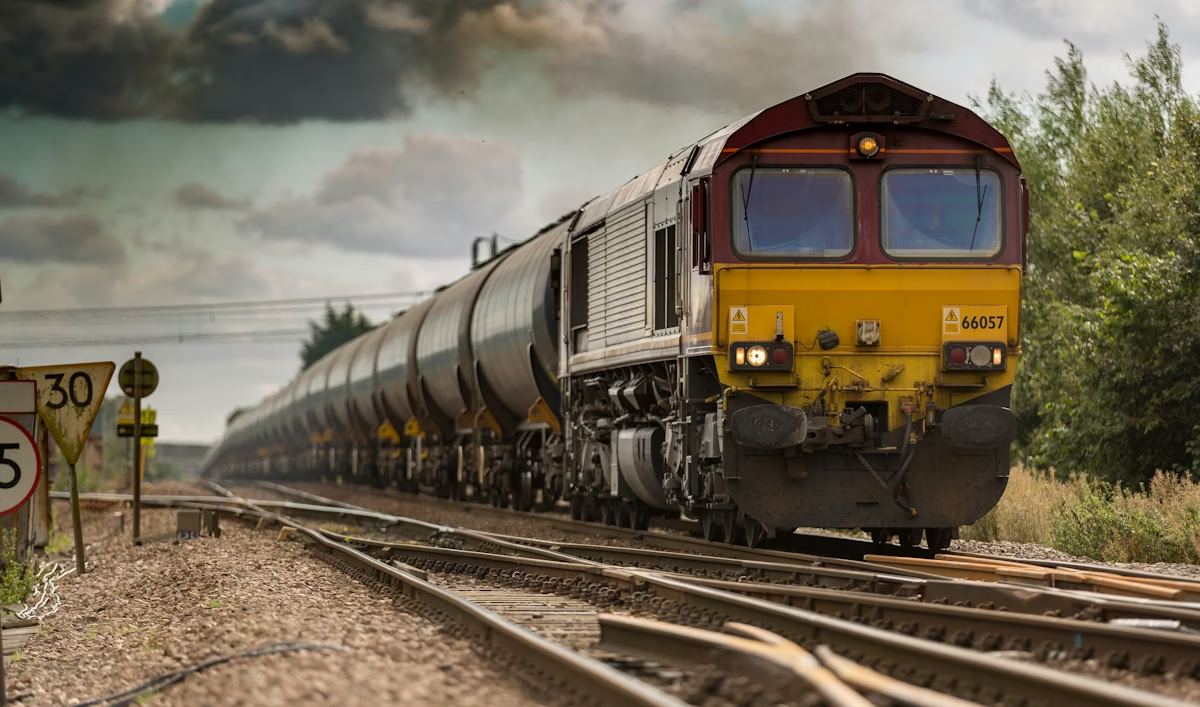
A well-run land bridge lives or dies at the gauge change. Done badly, that is where three to five days quietly disappear.
The operators who deliver the headline transit times do three things well: they hold block-train allocation rather than scrambling for spot space, they staff the interchanges so transfers do not wait, and they pre-clear customs at each border so the train is not held for paperwork. The map makes rail look simple. The execution is where the days are won or lost.
Whether it's a single LCL pallet or a chartered vessel, the conversation starts the same way — with a real person, on the phone or in your inbox.