The Trans-Eurasian Land Bridge: When Rail Beats the Ocean
Block trains from China to Europe arrive in roughly half the ocean transit at a fraction of air cost. The catch is the gauge changes — and who manages them.
Read ArticleOvershadowed by the headline-grabbing Asia–Europe land bridge, the China–Vietnam rail corridor has quietly become one of the most useful lanes in the region — a daily, dependable option for cargo moving between southern China and Vietnam's industrial heartland.
The corridor runs primarily through two border crossings: Lao Cai in the northwest and Dong Dang in the northeast. Together they handle a rising volume of containerised goods — components feeding Vietnam's manufacturing base inbound, and finished products moving the other way. The appeal is reliability: a scheduled service that sidesteps the congestion and weather exposure of the road borders.
Cross-border rail is rarely the whole journey. Its real power is as a leg in a multimodal chain — feeding cargo to a Vietnamese port for onward ocean shipping, or connecting to the broader Eurasian network for goods continuing to Europe. Treated as a building block rather than a standalone mode, it unlocks routing options that pure road or pure sea cannot.
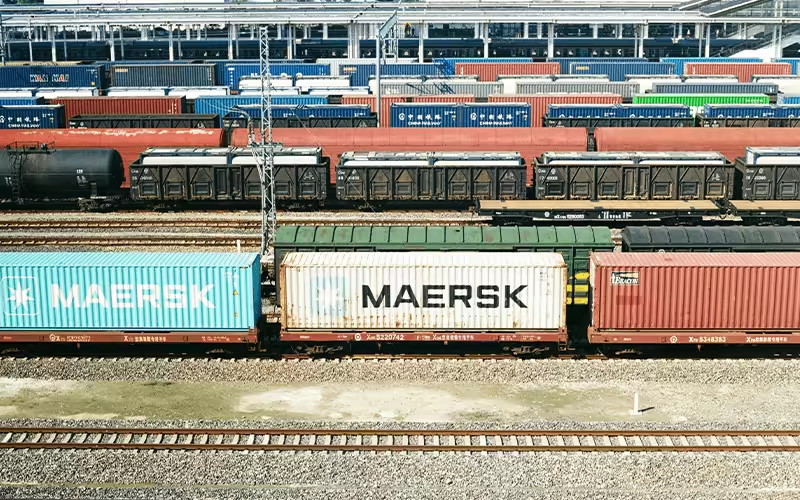
The smartest cross-border plans do not ask "road or rail?" — they ask which leg each mode should own.
As with any rail move, the value is in the handoffs: clean customs clearance at the border, coordinated inland trucking on both ends, and container availability that does not leave cargo waiting. The infrastructure is there. What turns it into a dependable lane is the discipline wrapped around it.
Whether it's a single LCL pallet or a chartered vessel, the conversation starts the same way — with a real person, on the phone or in your inbox.