


The Bill of Lading Decoded: Master vs House, Original vs Telex Release
The bill of lading is receipt, contract and title to your goods all at once. Knowing which type you are holding decides who can collect the cargo, and when.
Read ArticleIncoterms are the eleven three-letter rules, published by the International Chamber of Commerce, that define the division of cost, risk and responsibility between a buyer and a seller. They are quoted in almost every international sale — FOB Shanghai, CIF Rotterdam, DDP Hanoi — and yet they are routinely misused. Understanding them is the difference between a clean transaction and a surprise invoice.
An Incoterm answers three questions: who arranges and pays for each leg of transport, at what exact point risk passes from seller to buyer, and who handles export and import clearance. What it does not do is transfer ownership, set the price, or specify payment terms — those live elsewhere in the contract. Treating an Incoterm as a complete deal is the first mistake.
Incoterms 2020 split into two groups. Seven work for any mode of transport, including containers and air:
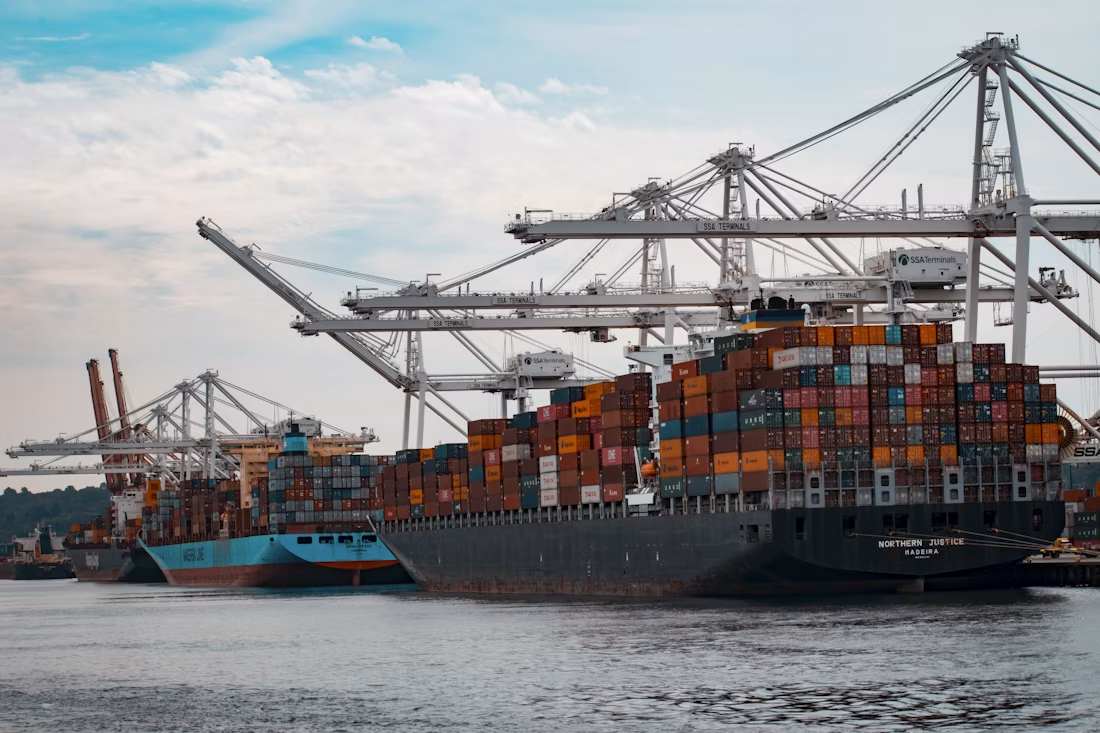
Four are reserved for sea and inland waterway only: FAS (Free Alongside Ship), FOB (Free On Board), CFR (Cost and Freight) and CIF (Cost, Insurance and Freight).
The crucial idea is that cost and risk do not always transfer at the same place. Under CIF, the seller pays freight and insurance all the way to the destination port — but risk passes the moment the goods are loaded on board at origin. If the vessel sinks mid-voyage, it is the buyer's loss to claim, even though the seller bought the freight. Confusing "who pays" with "who bears the risk" is the most expensive Incoterms mistake there is.
Cost and risk are two different clocks. The term that pays the freight is not always the party that loses the cargo.
Two traps recur. First, using FOB or CIF for containerised cargo: these sea terms assume goods cross the ship's rail, but a container is handed over at a terminal days before loading — FCA and CIP are the correct modern equivalents. Second, agreeing DDP without checking the import tax position: the seller becomes responsible for duties and often local VAT registration in a country where it may have no legal presence.
Whether it's a single LCL pallet or a chartered vessel, the conversation starts the same way — with a real person, on the phone or in your inbox.