


The Bill of Lading Decoded: Master vs House, Original vs Telex Release
The bill of lading is receipt, contract and title to your goods all at once. Knowing which type you are holding decides who can collect the cargo, and when.
Read ArticleFull Container Load or Less-than-Container Load is the first fork in the road on almost every ocean booking. The choice looks like a question of volume, but it is really a question of total cost, transit reliability and how much handling your cargo can tolerate. Default to the wrong one and you pay for it on every shipment.
With FCL, you book an entire container — 20ft, 40ft or 40ft high-cube — and it is yours whether it is full or half empty. It is sealed at origin and opened at destination, with no one else's cargo inside. With LCL, your pallets share a container with other shippers' goods. A consolidator combines several consignments at a Container Freight Station (CFS), and they are separated again at the destination CFS.
LCL is built for small shipments. If your cargo is a few pallets and would leave a 20ft container mostly empty, paying only for the space you use is cheaper than paying for air you do not need. It also lets you ship more frequently in smaller batches — useful for testing a market, replenishing fast-moving stock, or keeping inventory lean.
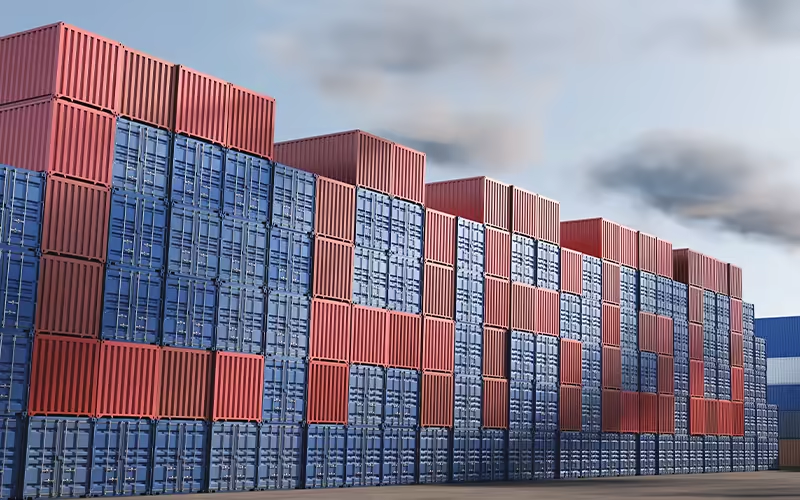
LCL sells you space by the cubic metre; FCL sells you a sealed box. Below the break-even you are buying space — above it you are buying protection.
There is a crossover point, usually somewhere around 13–15 CBM, where the per-CBM rate of LCL adds up to more than the flat rate of a full 20ft container. Above that volume, FCL is simply cheaper. But cost is not the only reason to choose it. FCL means fewer touch points: your goods are not handled at a consolidation warehouse, not stacked under someone else's freight, and not exposed to a neighbour's damaged, leaking or mis-declared cargo. For fragile, high-value or time-sensitive shipments, that isolation is worth paying for even below the break-even.
LCL ocean rates look low, but the destination charges are where shippers get surprised. CFS handling, deconsolidation, documentation and delivery-order fees are billed per shipment and can rival the freight itself. LCL also takes longer end to end, because consolidation and deconsolidation add days at both ends, and a single delayed co-loader can hold up the whole container.
Whether it's a single LCL pallet or a chartered vessel, the conversation starts the same way — with a real person, on the phone or in your inbox.