Overview

The container that clears at the gate,
not at the yard.

Customs is where shipments quietly die. A wrong HS code costs you 5-15% duty over a five-year period. A missing C/O wipes out an FTA tariff cut on the whole consignment. A red-lane inspection that wasn't pre-empted ties up a container for three days at demurrage. None of these show up in the freight quote — they show up later, on the landed-cost statement.

We run customs as a discipline, not a clerical add-on. Licensed brokers in-house at HCM, Hai Phong and Da Nang, connected directly to the VNACCS e-customs system. We file before the vessel arrives, classify HS codes against your actual product spec sheet, and select the right C/O form against the buyer's destination — Form A, D, E, AK, AJ, VK, CPTPP, EVFTA — to capture every FTA benefit you're entitled to.

Beyond Vietnam, our compliance partners handle the destination side too: AMS/ACI for North America, ENS for Europe, customs lodgement in China, India, Australia and the Middle East. One bill, one accountability line, no inbox tag at the border.


Why BCOLogix for Customs

Three places where
most customs delays start.

Anyone can submit a declaration. The difference between a same-day release and a three-day hold is in who classifies the goods, when the filing goes in, and whether the FTA paperwork was prepared upstream.
01

Licensed brokers in-house

Our customs team holds individual VN broker licenses — not a sub-contracted desk. They sit alongside the ops team that booked the freight, so when a query comes back from VNACCS at 2am, it gets resolved by someone who already knows the shipment.

VN-licensed · same team, same desk
02

Pre-filing discipline

We lodge the customs declaration before the vessel arrives, not after. Pre-classification at booking, pre-validation of C/O, pre-clearance of inspection-flagged items — so the green-lane release is waiting when the container hits the yard, not the other way around.

Filed before the vessel arrives
03

Duty optimization

Correct classification can cut a duty bill 30% or more — wrong classification can build a multi-year audit liability you don't see coming. We audit your HS codes against the latest tariff schedules and tune your C/O strategy across CPTPP, EVFTA, RCEP and the ASEAN FTAs to land at the lowest legal rate.

HS audit · FTA optimization
Service Lines

Three ways we
keep your cargo moving
across borders.

Customs clearance, classification consulting and certificates of origin — each handled by licensed brokers in-house, not outsourced to a third party. One license, one team, one accountability line.
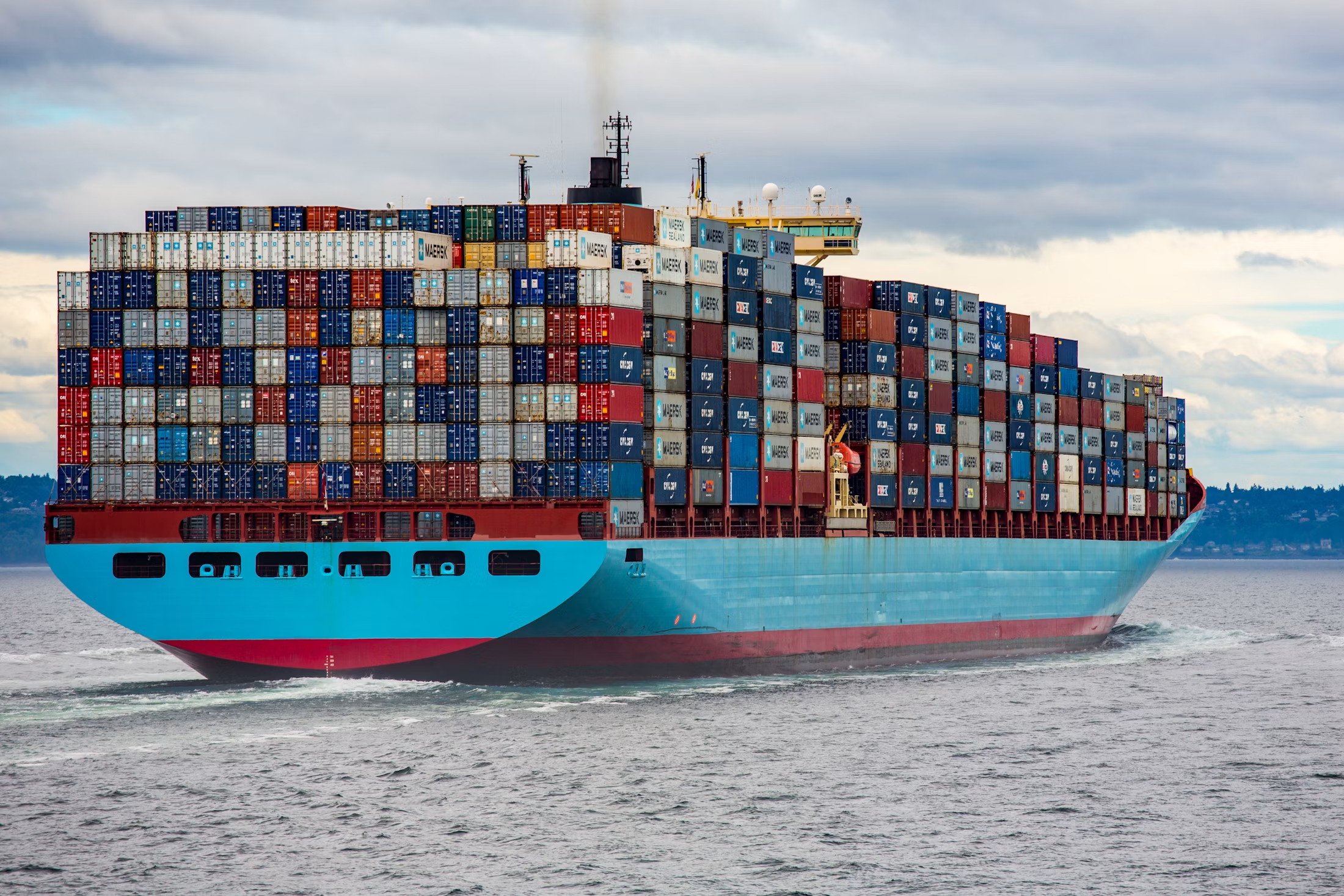
01 Container ship arriving at Vietnam port awaiting customs clearance
VN · Cross-border
IM EX VNACCS

Import / Export Clearance

Full customs declaration, duty calculation and document submission for every port of entry and exit in Vietnam — sea, air, road and rail. Pre-filing default, same-day release on green lane, hands-on coordination on yellow and red.

  • VNACCS & e-Customs filing — direct system connection, no batch delay
  • Green · Yellow · Red lane handling — on-site inspection coordination, query response same-day
  • Bonded transfer & in-bond moves — between FTZ, bonded warehouse and inland clearance
  • Duty & VAT payment — via our bonded account if you prefer to defer cash-out
Request a quote
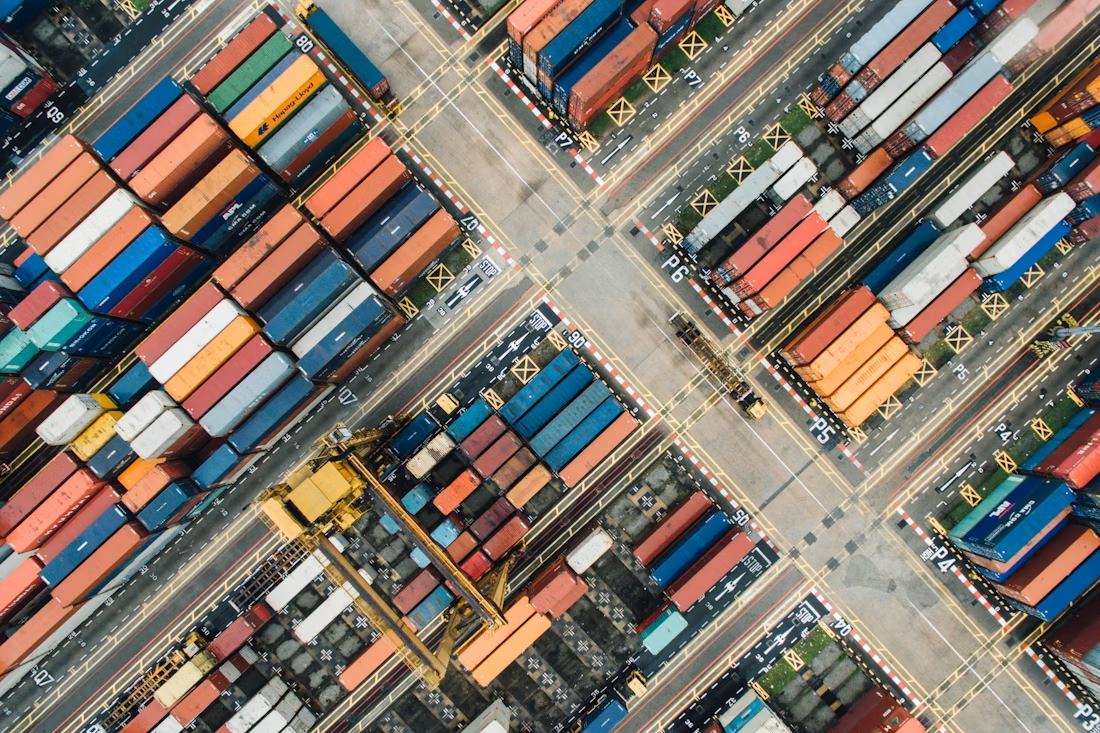
02 Tariff schedule and HS code data analysis
Consulting · Audit
HS FTA Audit

HS Code & Tariff Consulting

Correct HS classification can cut your duty bill by 30% or more. Wrong classification can build a multi-year audit liability you don't see coming. We audit your codes against the live tariff schedule and reclassify where the regulations defensibly allow.

  • HS classification review & advance ruling — defensible written rationale per SKU
  • FTA tariff optimization — model CPTPP, EVFTA, RCEP and ASEAN side-by-side
  • Anti-dumping duty advisory — anticipate exposure on steel, chemicals, electronics
  • Historical refund & voluntary disclosure — recover over-payments within the 5-year window
Request an audit
03 Certificate of origin documentation
Form A · D · E · CPTPP · EVFTA
C/O PMT FTA

C/O & Permits

Certificates of Origin under every FTA Vietnam is part of, plus specialized import permits for regulated goods — issued in-house through our VCCI desk relationships, not outsourced to a sub-broker.

  • C/O Form A, D, E, AK, AJ, VK, CPTPP, EVFTA — chosen against destination, not by default
  • Specialized goods permits — MIT, MoH, MARD, CR-mark and product-specific licenses
  • Fumigation, phytosanitary & quality certs — coordinated alongside the freight booking
  • Rules-of-origin documentation — supporting evidence files retained for audit defense
Request a quote
Cross-border destination clearance? AMS/ACI for North America, ENS for EU, ICS2 for European entry, plus partner brokers across CN, IN, KR, JP, AU and the Middle East. One bill, end-to-end.
How We Work

From booking to release in four steps.

One named broker stays with you from pre-classification to gate-out — no inbox tag.

01

Pre-classify

Share commercial invoice, packing list and product specs. We classify HS codes against the live tariff, flag duty rates and identify every applicable FTA — before the vessel sails.

HS · FTA mapped at booking
02

Pre-file

Declaration lodged in VNACCS before vessel arrival. C/O, permits and supporting documents validated. Inspection-prone items flagged and pre-cleared with the relevant authority.

VNACCS lodged · docs validated
03

Clear

Lane assignment monitored — green-lane release confirmed, yellow-lane queries answered same-day, red-lane inspection coordinated on-site. Duty & VAT paid via our bonded account if you prefer.

Green · Yellow · Red lane handled
04

Release

Gate-out instruction issued, customs file archived for the 5-year retention period, landed-cost summary sent to your accounting team. Ready for the next shipment.

Landed-cost report · 5y archive
Customs FAQ

Questions before you book.

The most common things shippers ask us about VNACCS lanes, HS codes, FTAs and post-clearance audits. If yours isn't here, the customs desk responds in 2 business hours.

Need a custom answer?

Talk to a licensed customs broker on our compliance team.

Talk to ops
What's the difference between green, yellow and red lane?
VNACCS assigns one of three lanes to each declaration based on a risk algorithm. Green = system clearance, container can move once duty is paid (same day, sometimes minutes). Yellow = document review by a customs officer (typically half a day to one day). Red = physical inspection of the container (1-3 days). We can't change the lane assignment, but we can pre-empt yellow-lane queries by anticipating what the officer will ask, and we coordinate red-lane inspections on-site to minimize the holding time.
Should we pre-file or wait until the goods arrive?
Pre-file, almost always. Vietnam allows declarations up to 30 days before vessel arrival; the legal cut-off is 15 days after arrival. Filing in advance means the system risk-scores your declaration before the cargo lands — so the lane is known when the vessel berths, not days later. The only times to delay are when documents aren't yet final (e.g. invoice still being negotiated) or for goods subject to a specialized permit that hasn't issued. We default to pre-file unless there's a specific reason not to.
How do you pick which C/O form to use?
By destination market and applicable FTA. Form A for GSP destinations, Form D for ASEAN, Form E for ASEAN-China, AK for Korea, AJ for Japan, VK for Korea bilateral, CPTPP for the trans-Pacific block, EVFTA for the EU. Some destinations qualify under multiple FTAs and the duty rate differs — we model both and pick the form that lands at the lowest legal duty, then handle rules-of-origin documentation accordingly.
What if our HS code is wrong on a past shipment?
If you over-paid duty (classified into a higher-rate code than required), Vietnam allows a refund claim within 5 years of the duty payment date. If you under-paid, voluntary disclosure before a post-clearance audit reduces penalties significantly versus being found during an audit. We run an HS audit on your historical shipments — typically 2-3 weeks of work — and produce a defensible reclassification with supporting product evidence, then file the refund or disclosure as appropriate.
Do you handle specialized goods permits?
Yes — MIT (Ministry of Industry and Trade) import licenses for regulated goods like steel, chemicals and certain electronics; MoH (Ministry of Health) registrations for food, pharma and cosmetics; MARD (Ministry of Agriculture) for plant/animal products and phytosanitary; CR marks for goods under the conformity-of-regulation scheme. Lead times vary from 5 working days (CR) to 60+ (some MoH registrations) — we tell you upfront so the freight plan is realistic.
What is a post-clearance audit and how do we prepare?
Vietnam customs can audit your declarations up to 5 years after clearance, focusing on HS classification, customs valuation, rules-of-origin compliance and FTA claims. The best preparation is a clean trail: consistent classification across shipments, contemporaneous valuation worksheets, original supplier C/O documents archived, and a written classification rationale for any non-obvious codes. We provide an audit-defense file at clearance — most clients only realize the value when the audit notice arrives 3 years later.
Pre-classify before booking

Send us your invoice.We'll send back the cleanest route through customs.

Share your commercial invoice and packing list. We come back with HS classification, FTA options, applicable permits and a landed-cost projection — no obligation.