


Demurrage and Detention: A Shipper's Guide to Avoiding the Hidden Bill
D&D charges are the freight cost nobody quotes you and everybody pays. The mechanics are simple, and so are most of the fixes.
Read ArticleAsk someone outside the industry how a reefer shipment works and they will describe setting a temperature. Ask someone who has lost a container of seafood to a cold-chain failure and they will describe the gaps — the quiet hours where the box was not plugged in and nobody was watching.
Choosing and confirming the correct set-point at stuffing is genuinely simple. The hard 90% is everything that happens between the origin facility and the customer's door: the time on the quay before loading, the trucking leg where power depends on a generator set, the yard dwell at transhipment, and the final delivery. Each of these is a point where the chain can silently break.
Two disciplines separate a reliable cold chain from a hopeful one. The first is power continuity — a GenSet on every off-grid leg so the unit never goes dark during trucking or yard time. The second is monitoring — a data-logger that records the entire journey, not just the endpoints.
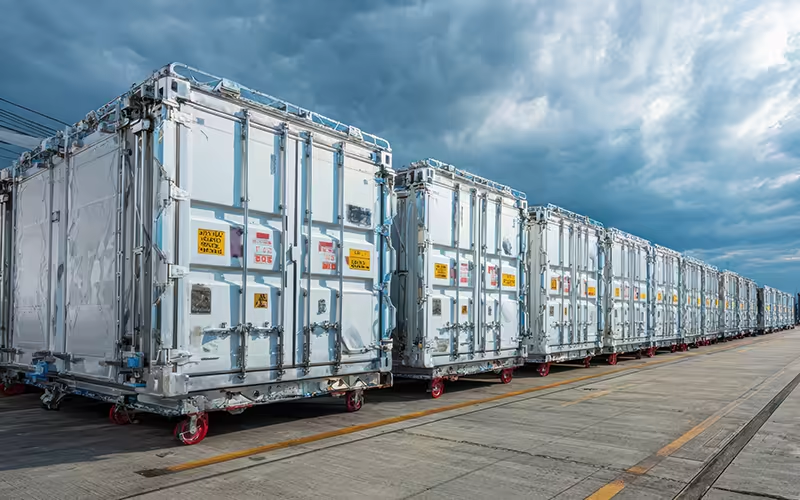
A reefer move is only as strong as its weakest handoff. The set-point gets the attention; the handoffs lose the cargo.
For seafood, pharma, fresh produce and dairy, the question is not whether the cargo arrived cold — it is whether you can prove it stayed cold the whole way. A continuous temperature chart on delivery turns a potential dispute into a closed file. Without it, you are negotiating from assurances, and assurances do not survive a rejected consignment.
Whether it's a single LCL pallet or a chartered vessel, the conversation starts the same way — with a real person, on the phone or in your inbox.