


Sea, Rail or Air? A Practical Cost–Time Framework for Asia–Europe
Most mode decisions default to habit. A simple cost-per-day-saved framework makes the trade-off explicit — and often surprises the people who run it.
Read ArticleWhen the first vessels began diverting around the Cape of Good Hope rather than transiting the Suez Canal, the headlines framed it as a temporary detour. Two years on, the detour has become the route — and the knock-on effects have quietly rewritten the planning assumptions behind every Asia–Europe shipment.
A Shanghai–Rotterdam sailing via Suez ran roughly 26–30 days. The same service around the Cape adds 10–14 days, pushing door-to-door times past six weeks once port congestion and inland legs are counted. That is not a rounding error — it is an entire inventory cycle. Safety stock that was calibrated for a four-week ocean leg now runs dry before the replacement container berths.
Longer round-trips mean each vessel completes fewer rotations per year, so the same nominal fleet delivers less effective capacity. Carriers absorbed this by reactivating idle tonnage and slowing steaming, but the slack is thin. When demand spikes, rates move fast and space tightens faster.
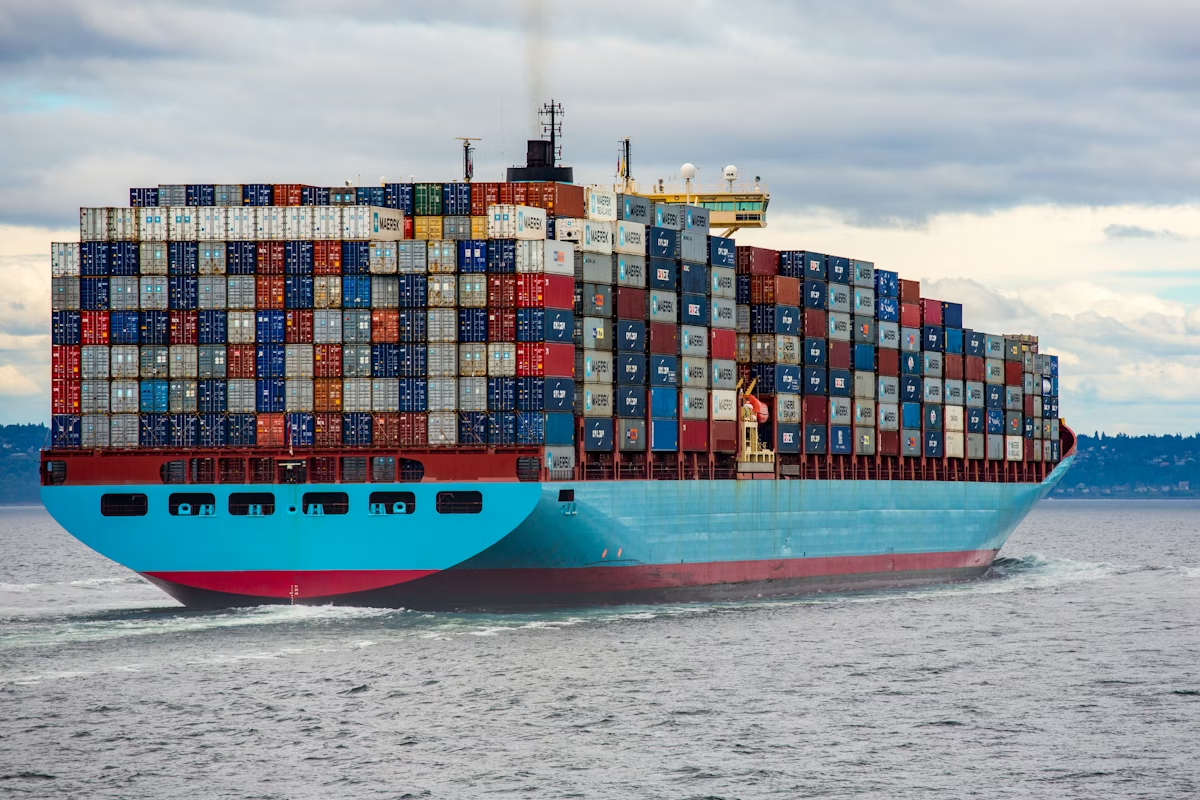
The shippers who coped best did not predict the disruption — they built schedules that survived it, with buffer baked in and a second mode on standby.
Three practical moves consistently reduce exposure on this corridor:
None of this is glamorous. But the cost of treating a structural change as a temporary one shows up directly on the landed-cost statement — and by then it is too late to plan around.
Whether it's a single LCL pallet or a chartered vessel, the conversation starts the same way — with a real person, on the phone or in your inbox.