


Cracking Last-Mile Across Vietnam's 63 Provinces with COD
Nationwide coverage and cash-on-delivery are table stakes for Vietnamese e-commerce. Delivering both reliably — with clean returns — is the hard part.
Read ArticleMost importers think of a bonded warehouse as a place to put goods. The ones who use it best think of it as a place to keep cash — because the real value of bonded storage is not the square metres, it is the timing of when you pay tax.
Goods held in a customs-bonded warehouse have not formally entered the domestic market, so import duty and VAT are not yet due. In Vietnam, that deferral can run up to 365 days. You pay the tax only when stock leaves the bond for domestic sale — and pay nothing at all on units that re-export. The tax bill follows the revenue, instead of preceding it by months.
Paying duty and VAT at the moment of import ties up capital in inventory that has not yet earned anything. Deferring it means that money stays available for the things that actually grow the business. For high-value or slow-moving stock, the working-capital effect can be substantial.
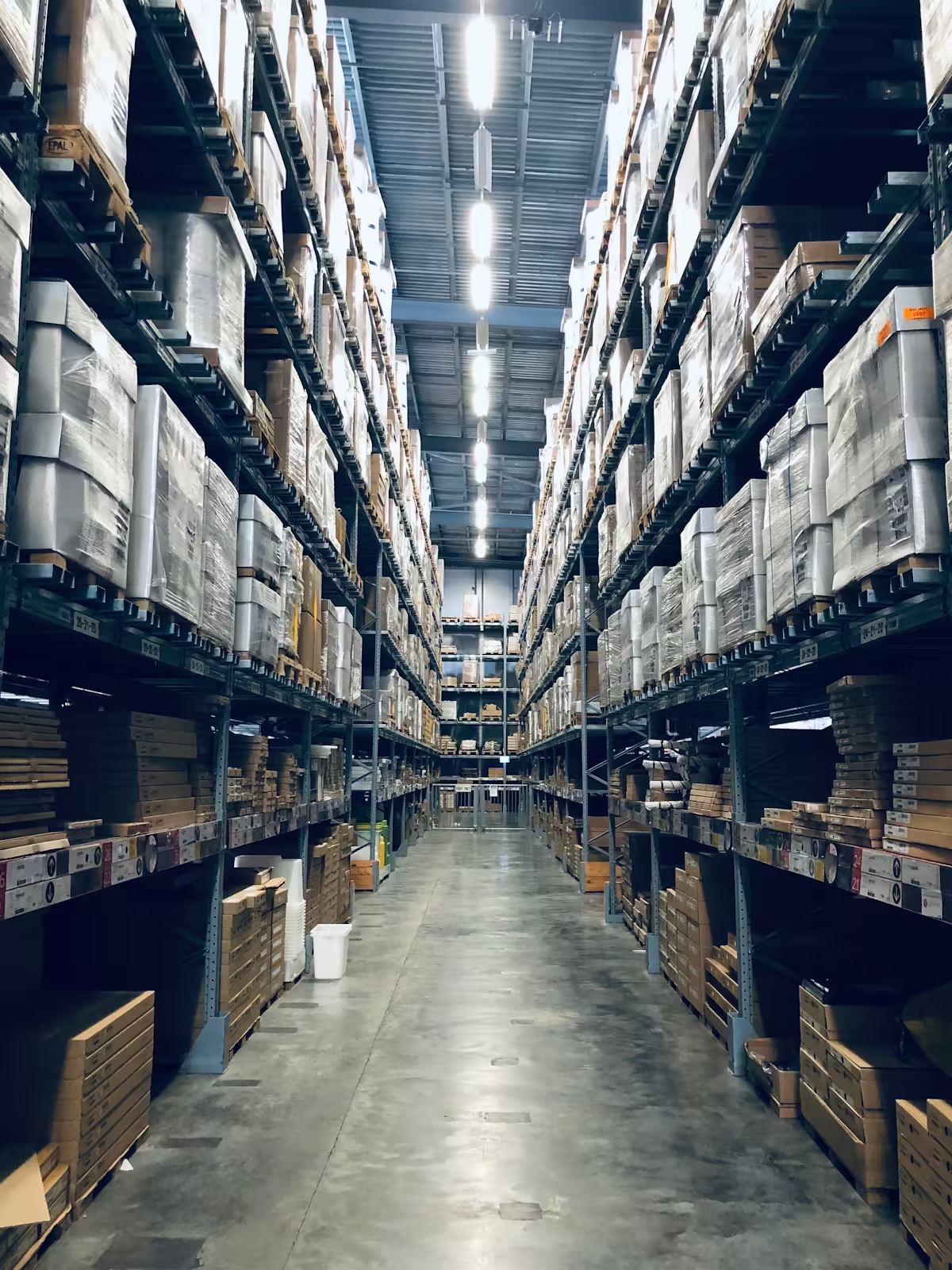
Duty paid at import is capital frozen at the border. Duty deferred is capital still working in your business.
The storage is the visible part. The cash-flow advantage is the part that shows up where it counts — on the working-capital line.
Whether it's a single LCL pallet or a chartered vessel, the conversation starts the same way — with a real person, on the phone or in your inbox.